© Magnific
July 26, 2026
Christine Bürg & Marianne Waldenfels
Racing heart, shortness of breath, dizziness — panic attacks often seem to come out of nowhere. Psychotherapist Klara Hanstein explains what happens in the body, what brings immediate relief, and how people can overcome the fear for good.
Panic attacks often seem to come out of nowhere. Suddenly the heart is racing, breathing turns shallow, and dizziness and a sense of mortal terror take hold. Clinical psychologist and psychotherapist Klara Hanstein knows this feeling firsthand — for years, she suffered from panic attacks herself. In this interview, she explains what happens in the body during a panic attack, why the fear often surfaces only after a stressful period has passed, and how those affected can learn to break the cycle of anxiety for good.
What is a panic attack — and how does it differ from a normal fear response?
A panic attack is an extremely intense state of anxiety that most people also feel powerfully in their bodies. They experience shortness of breath, dizziness, and a racing heart, and they often have no idea where these overwhelming physical sensations are coming from.
The difference from a normal fear response is that with ordinary fear, we usually know what we are afraid of — an exam, say, or an important appointment. We can place the situation in context.
A panic attack is different. For most people, it arrives completely out of the blue. The nervous system ramps up within seconds, the body goes into overdrive, and you have absolutely no idea what is happening.
What happens in the body during a panic attack?
From an evolutionary perspective, the fight-or-flight reflex is triggered. We perceive something in our environment — or within ourselves — as a threat. Our nervous system is genuinely trying to protect us, and it sets in motion all the processes needed to defend us against that perceived danger.
That is why breathing speeds up, heart rate climbs, and muscles tense. The body is readying itself to fight or flee.
In reality, however, there is no actual danger. That is why I like to describe panic attacks as false alarms — misfires of the nervous system. They produce the feeling of being in mortal danger even though there is objectively no threat present.
Many people also describe a sense of losing control over themselves, their bodies, or their thoughts. Some even believe they are going to die because their heart is pounding so hard. The physical reactions and these thoughts feed off each other and can escalate further and further until a full panic attack takes hold.

Will artificial intelligence replace doctors? Digital health expert Prof. Dominik Pförringer explains which tasks AI will take on in the future, where its limits lie, and why the personal doctor-patient conversation remains irreplaceable.
Christine Bürg & Marianne Waldenfels

An interview with
Univ.-Prof. Dr. med. Dominik Pförringer

The first GLP-1 weight-loss pill has been approved in the EU. Can it compete with Ozempic, Wegovy & Co.? Cardiologist Prof. Uwe Nixdorff explains the tablet's advantages and limitations compared with injections.
Christine Bürg & Marianne Waldenfels

With
Prof. Dr. Uwe Nixdorff

"Feel good, live better" – in this podcast episode, Dr. Alexander de Heinrich shares how he helps his patients achieve a body they feel truly comfortable in.
Christine Bürg

An interview with
Dr. Alexander de Heinrich

Many people start their day with a "half-empty battery," says sports medicine physician Dr. Lutz Graumann. He explains why recovery matters more than many people realize—and how sleep, nutrition, exercise, and simple habits can help restore your energy
Christine Bürg & Marianne Waldenfels

Walking is one of the healthiest forms of exercise, but small everyday habits can reduce its benefits. Here's why pace, posture, footwear, and smartphone use matter more than you might think.
Marianne Waldenfels

With
Univ.-Prof. Dr. med. Dominik Pförringer
Why do some people get panic attacks while others do not?
There is no single trigger. In my psychotherapeutic practice, I have always considered a range of factors. Genetic predisposition can play a role — people are more likely to develop anxiety disorders or panic attacks if their parents or grandparents experienced similar problems.
In addition, many people develop panic attacks after traumatic experiences or during periods of prolonged overwhelm. I am not talking about a tiring workday, but about sustained, intense stress and lasting feelings of being overwhelmed. Many of those affected reach a point where they feel they can no longer cope with their situation. These factors appear again and again in people who suffer from panic attacks.
What role do stress and traumatic experiences play?
Interestingly, panic attacks often do not occur during the most intense period of stress — they strike only once life has quietened down again. Many people say: "The stressful phase is long behind me. I left my job or got out of the difficult relationship. So why is the panic only coming now?"
Think of the nervous system like a pressure valve. When the barrel finally overflows, a panic attack can occur. The key risk factors are situations in which everything has simply been too much for too long — too much stress, too many conflicts, too much overwhelm. Often it is not a single trigger but the interplay of several factors at once.
How can I help myself during a panic attack?
The most important thing is to first understand what is actually happening in your body. I suffered from panic attacks for a long time myself, and for me a turning point came when I finally understood that my nervous system was reacting so intensely because it was genuinely trying to protect me.
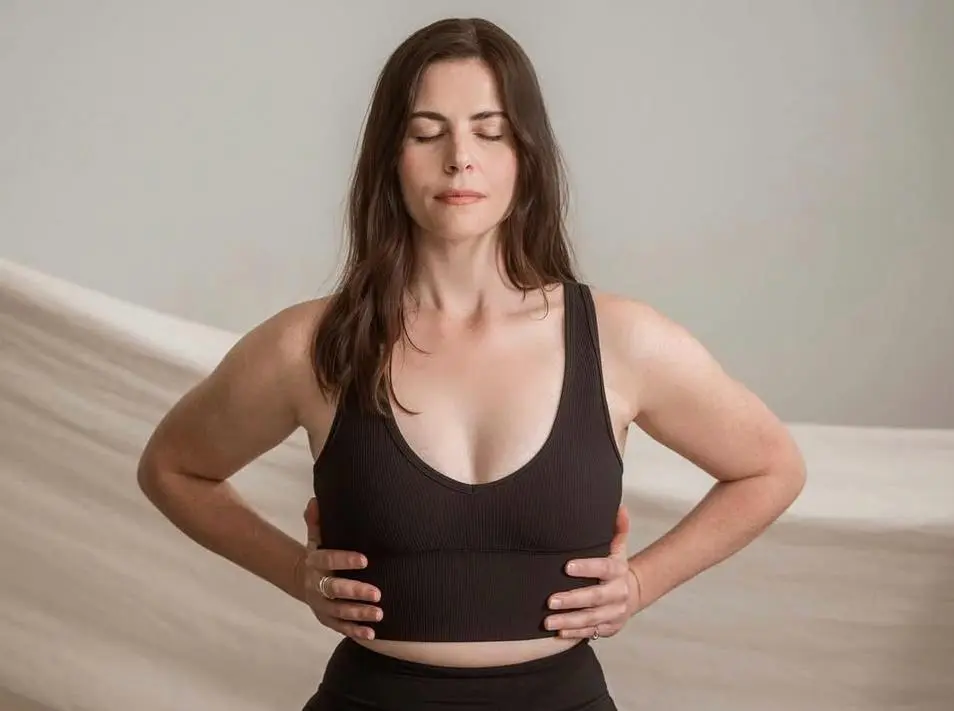
The immediate relief techniques are built on exactly that understanding. For me, breathing exercises were a real game changer. The breath is the one parameter of our nervous system that we can consciously control. I cannot tell my heart to beat more slowly — but I can change how I breathe.
During a panic attack, breathing typically becomes shallow and rapid. That is why it helps to consciously exhale for longer than you inhale — ideally at least twice as long. This signals to the nervous system that there is no danger and that it is safe to relax.
It also helps many people to actively ground themselves in their body again. Feeling your feet on the floor or running cold water over your hands can bring you back to yourself.
Have panic attacks become more common in recent years?
That is certainly my impression. When I spoke openly about my own panic attacks, many people suddenly came forward and said: "I know that feeling too." Often these were people I had known for years and would never have imagined had similar experiences.
I think there are two reasons for this. On one hand, the data also show that panic attacks and anxiety disorders have genuinely increased in recent years. When you consider what the past few years have brought — the pandemic, wars, the energy crisis, the climate crisis — many people are living under a constant weight of worry and uncertainty.
On the other hand, people today speak much more openly about mental health. There is greater awareness, and more and more people are sharing their experiences on social media. I believe both factors are at play: panic attacks are genuinely on the rise, while at the same time those affected are increasingly willing to talk about them.
Why do places like airplanes, cars, or supermarkets suddenly become sources of anxiety?
Many people affected begin to avoid certain situations. Over time, however, this only makes the anxiety worse. When we avoid the airplane, the car, or the supermarket, we are confirming to our brain that these situations really are dangerous — and as a result, the anxiety quietly continues to grow.
That is why it is important to gradually reapproach these situations, one small step at a time. At the same time, many people find that in the middle of a panic attack, helpful techniques suddenly desert them entirely. There is a biological reason for this: in that moment, the brain's fear center takes over and the area responsible for rational thinking is suppressed.
The good news is that we can learn to calm our nervous system ourselves. Every person carries this capacity within them. However, it does not come after one or two exercises — it takes time and regular practice.
Someone who is afraid of driving, for example, might start simply by sitting in the car and going for a short drive. For many people, the highway is particularly distressing. In that case, it can help to drive only as far as the next exit, use the breathing exercises, and then leave the highway. In this way, the nervous system learns again and again: I can handle this situation. Over time, it stops classifying it as a threat.
Can medication be helpful for panic attacks?
That is a very individual decision. As a psychotherapist and psychologist, I do not prescribe medication myself. However, I have worked with people whose symptoms were so severe that they could barely leave the house. In those cases, I advised them to also seek psychiatric support and to discuss medication with a specialist.
Medication can help to ease very severe symptoms initially and make daily life a little more manageable. What matters to me, though, is this: medication is not a substitute for psychotherapy. It neither resolves the underlying triggers nor does it regulate the nervous system in the long term.
That is why I would always recommend combining medication — when it is necessary — with therapy. Only then can those affected learn to regulate their nervous system in a lasting way and achieve real, lasting change.
Can panic attacks be overcome permanently?
Yes, I am firmly convinced of that. That said, it does not mean we will never feel fear again. Fear is important — it protects us in genuinely dangerous situations. So the goal is not to live entirely without fear.
Speaking from my own experience, I now drive on the highway quite naturally, go to restaurants, and go shopping without a second thought. There was a time when none of that was possible for me.
When my anxiety disorder first developed, I was told I would have to learn to live with it. That statement frightened me deeply at the time. I refused to accept that this was how my life would look forever.
I then threw myself into studying the nervous system. What I found is that our nervous system never stops learning throughout our entire lives. It can reassess situations and store them anew. My nervous system no longer classifies the highway or the supermarket as a threat — and that is why I am convinced that fears and panic attacks can be overcome.
What message would you like to leave with those who are affected?
The most important thing is always to focus on just the next small step. I meet many people who feel utterly at the mercy of their fear. They wish it would vanish overnight, set themselves enormous goals, and are then devastated when that does not happen straight away.
My most important message is: there is a way out of fear. Don't look at the whole mountain — just look at the next small step. You will be amazed at how far you end up.